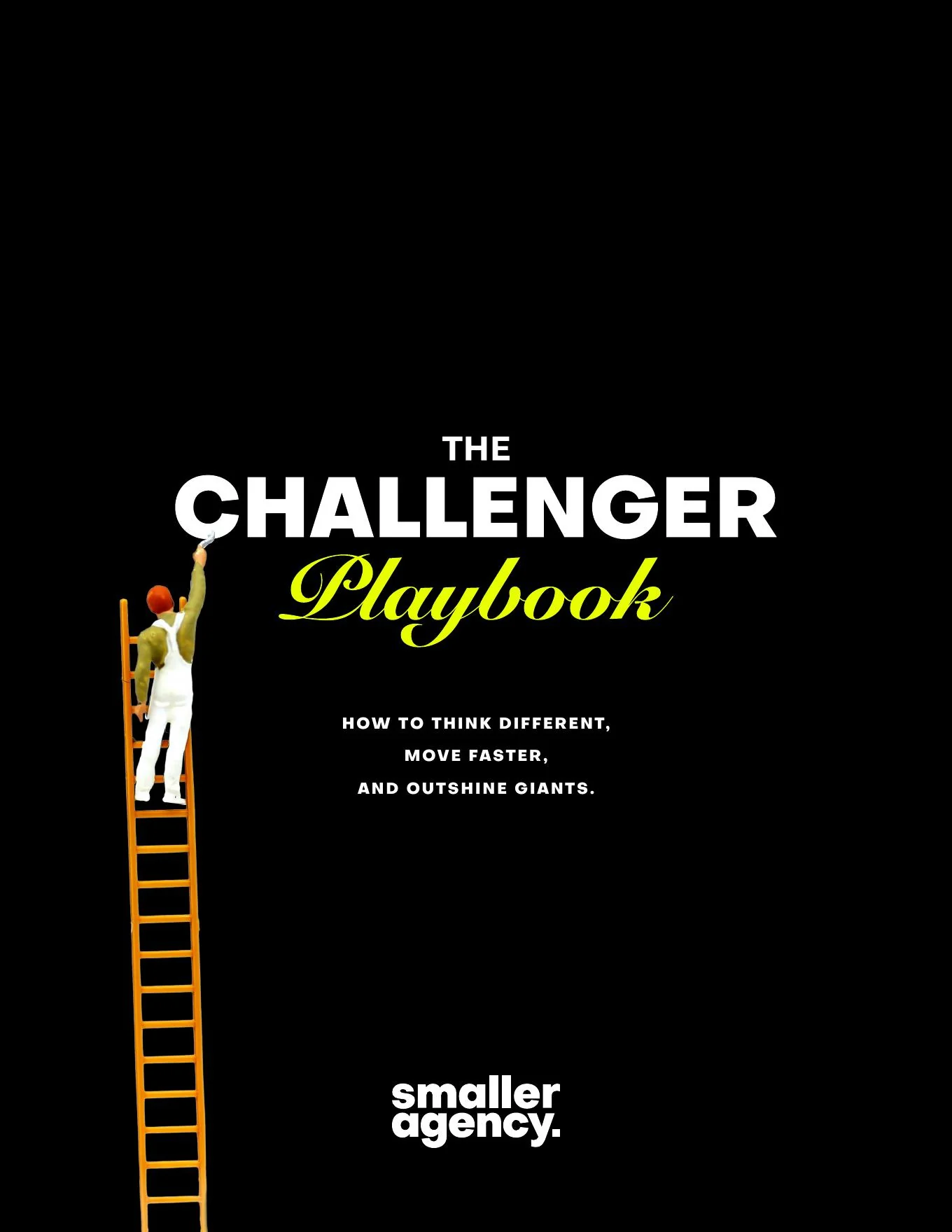
A challenger is not defined by size. It is defined by the belief it is willing to act on, the category rule it refuses to inherit and the speed with which it can turn that conviction into behaviour.
What makes a challenger?
A challenger picks a fight with an outdated category belief, moves faster than the incumbents and creates culture instead of waiting for permission to join it.
The point is not to act loud for attention. It is to make the difference easy to understand and difficult to copy.
Four rules to keep close.
Budget does not create challenger status. Conviction does.
The useful enemy is often an old belief, not the company with the biggest media plan.
Question the packaging, pricing, distribution and design conventions the category stopped seeing.
Create language, rituals and participation people can carry further than a campaign.
Five strategic moves.
The full playbook works through five practical strategies: redefine the enemy, reframe the category, overcommit to a belief, hack attention and build community first.
Each one includes a way to turn the idea into a decision. The exercises are there because a manifesto that never changes a product, package or behaviour is just wall copy.
Design is part of the argument.
Packaging, language, distribution and product behaviour all signal what the brand believes. If the design fits neatly into the category, the brand may have found a position without expressing it.
Could someone understand the fight before they read the strategy deck?
Who this is for.
Founders, brand leaders and innovation teams with a useful product, a limited budget and no interest in looking like the category leader’s quieter cousin.
Use the playbook before a positioning sprint, while writing a brief or when the brand has become so broadly agreeable that nobody can repeat what it stands for.
Take the full playbook.
No email gate. No nurture sequence waiting behind it.
Download the 61-page PDF ↘